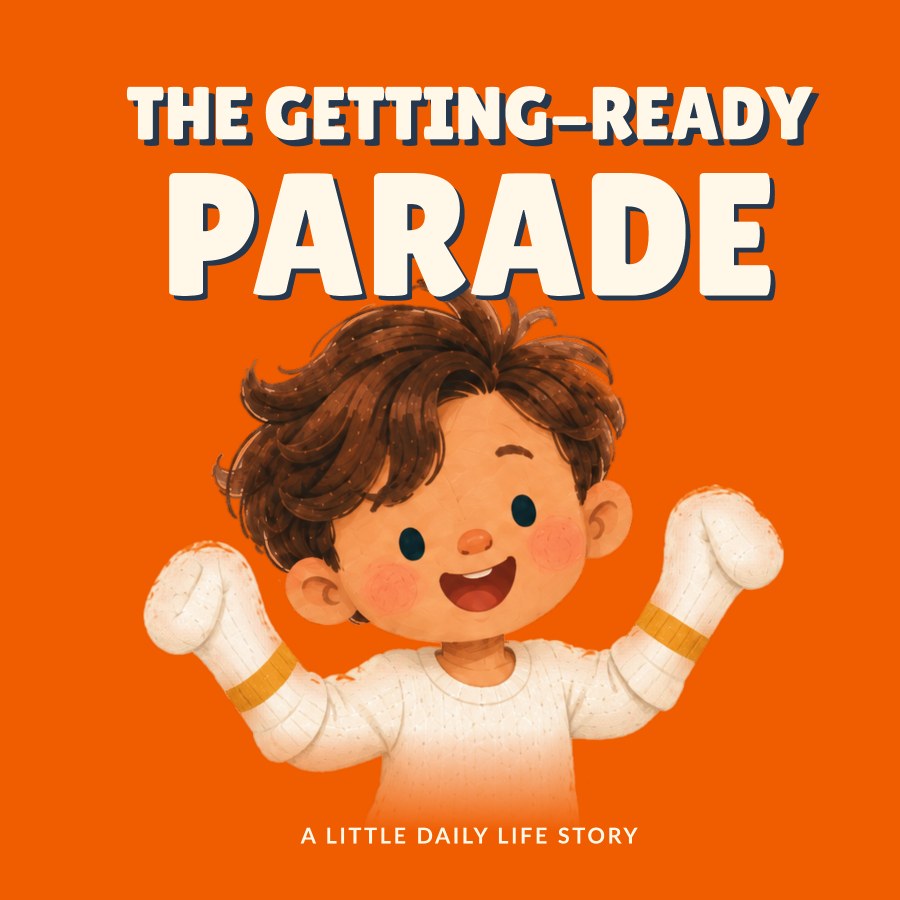
The Getting-Ready Parade
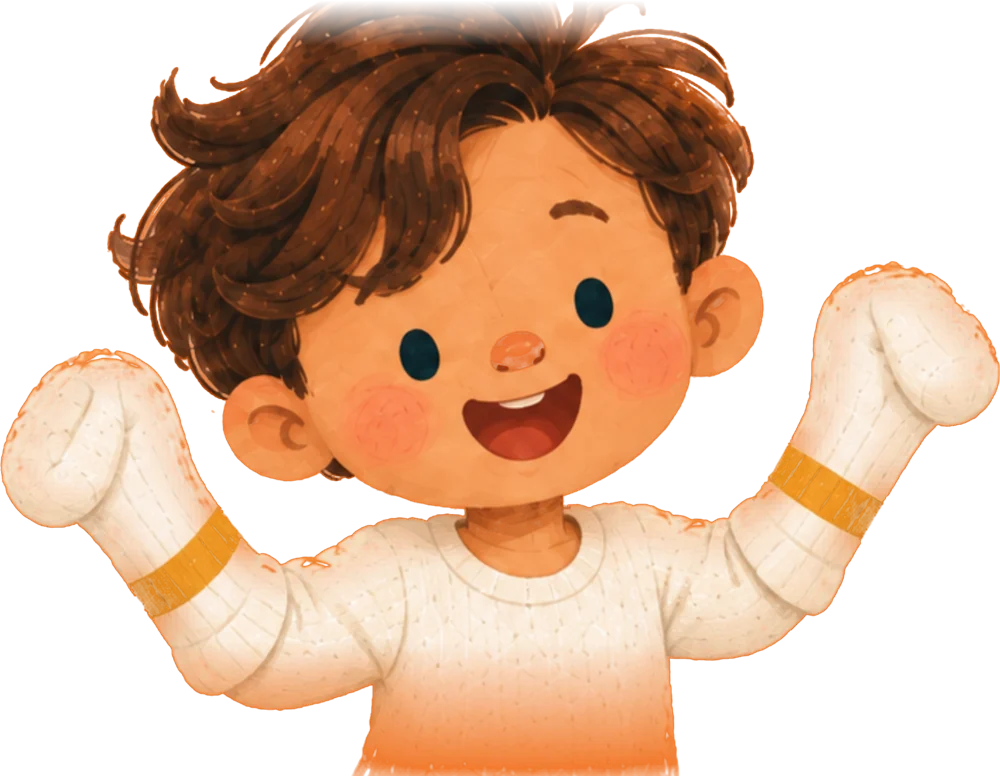
Socks on hands. Two feet, one tunnel. A turnaround shirt.
For getting dressed
Socks on hands, two feet in one trouser leg, a shirt on back to front. Learning to get dressed takes lots of tries. The Getting-Ready Parade turns those tries into a story, and here are a few ideas that help in the morning.
Between 3 and 5, children want to do it themselves long before their fingers are ready. Mix-ups are part of learning, not a sign that it isn’t working.
Children keep trying when a mistake feels funny rather than wrong, and when asking for a little help is allowed.
Put clothes out the night before, in the order they go on, so your child can see the next step.
Loose trousers, big neck holes and pull-on shoes let your child finish on their own and feel it.
Start the zip or line up the sock, then hand it back. In the book, Pip asks Dad for “just enough help”.
A sock on a hand is a joke, not a failure. Laughing together makes trying again feel easy.
Socks on hands. Two feet, one tunnel. A turnaround shirt.
For getting dressedMany children start dressing themselves with help around age 3 and manage most clothes on their own by about 5. Buttons, zips and laces often take longer, and every child moves at their own pace.
Give enough time, lay clothes out in order, choose easy clothes, and help with one small part instead of taking over. Treating mix-ups as funny keeps your child willing to try again.
Yes. The Getting-Ready Parade follows Pip as he gets dressed all by himself to go splashing in the rain, with socks on hands and a turnaround shirt along the way. It is a 24-page read-aloud book for ages 3 to 5.